Water Pressure Regulator Valve Replacement with a Zurn 600XL
Most homeowners don't think about water pressure until something goes wrong. A leaky faucet that won't stop dripping. A pipe that sounds like it's about to blow. Or appliances that seem to wear out way faster than they should. High water pressure is usually the culprit - and it quietly does damage over time.
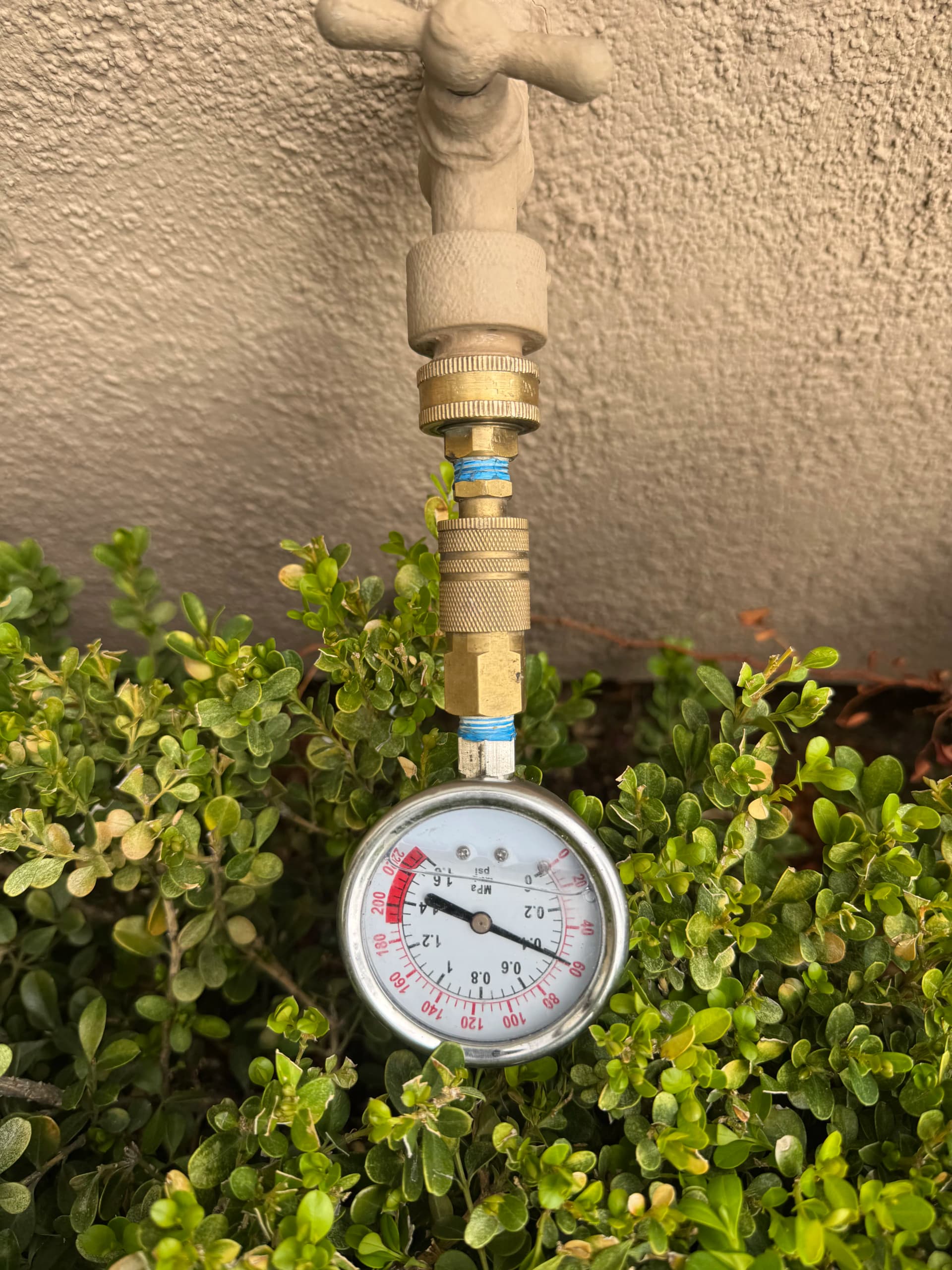
Here's what we were working with on this one: a pressure regulator valve that had given out and was no longer doing its job. We tested the line pressure at an outdoor hose bib using a gauge - and what we saw told us everything we needed to know. Too much pressure coming in means the whole system takes a beating. Fixtures, valves, supply lines, water heater connections - none of it is built to handle sustained high pressure.
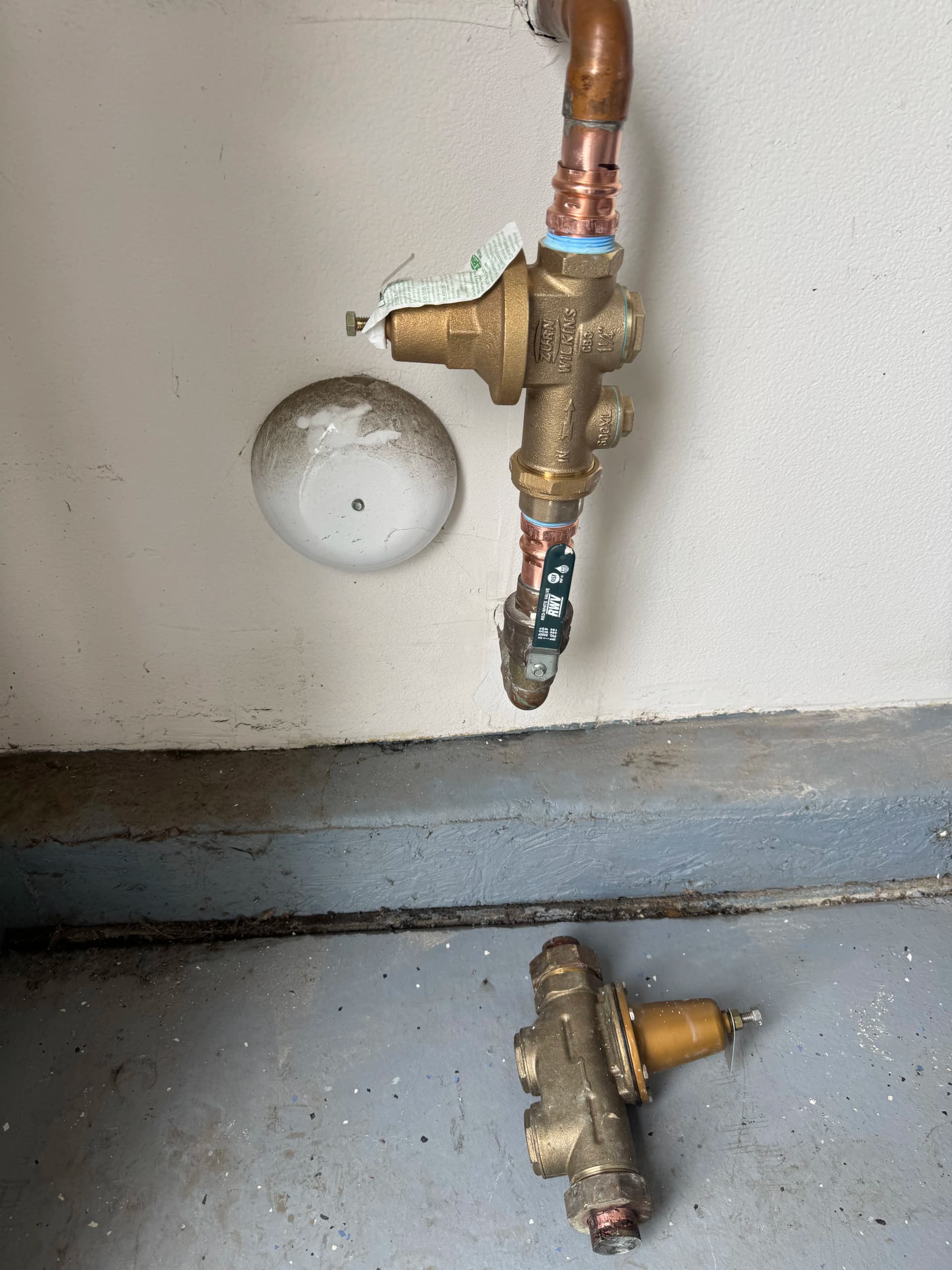
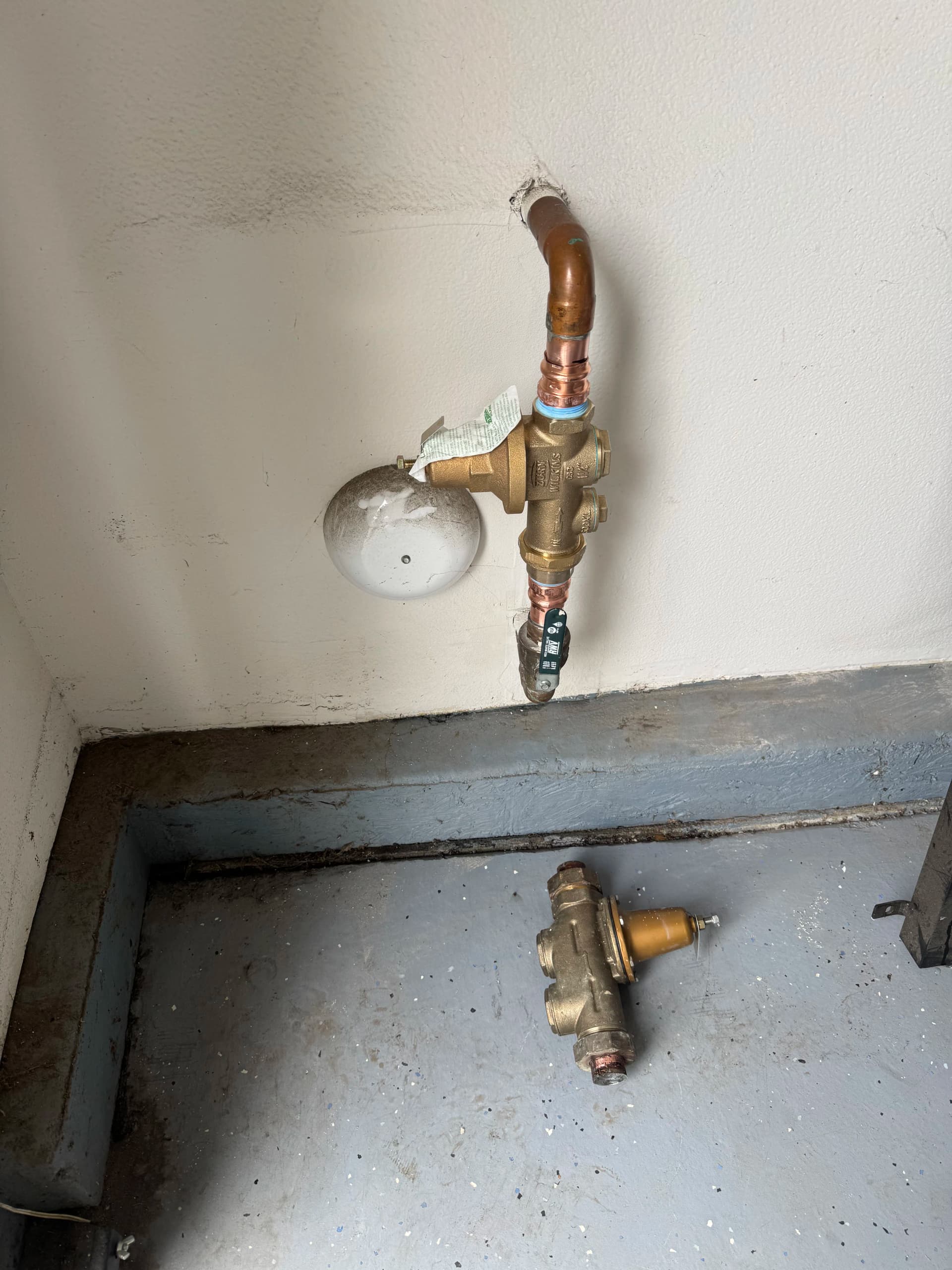
We swapped out the old regulator for a 1 1/4" Zurn 600XL. This is a commercial-grade pressure reducing valve - well-built, reliable, and sized right for the system it's protecting. The old valve came out, the new one went in clean, and now the system is running at a pressure that won't shorten the life of everything downstream.
A lot of what we do in water leak detection and repairs starts with pressure. When pressure is off, it can cause slow leaks, joint failures, and damage that builds up quietly behind walls or under slabs. Catching a failing regulator before it causes that kind of damage is one of the best things you can do for your plumbing system. It's a simple repair that prevents expensive ones.
If your pressure feels too strong at the tap, you hear banging pipes when you shut off a faucet, or your water heater pressure relief valve keeps tripping - it's worth having someone take a look. A quick pressure test can tell you a lot about what's going on inside your system.